How to Grow Plants: Complete Guide & Interactive Cheat Sheet (Light, Soil, Water, pH, Nutrients)

Evidence checked: November 9, 2026 · Version 2
Quick answer: Every plant—tomato, pothos, strawberry or lemon tree—runs on the same six things: enough light, roots that get both air and water, the right pH, the right temperature, the nutrients it is actually missing, and you checking on it. Get light and roots right first. Most “nutrient problems” I see are really a light, watering or pH problem wearing a yellow-leaf costume.
The numbers that matter most: fruiting plants like tomatoes want at least 8 hours of direct sun or a daily light integral (DLI) above 20 mol/m²/day. Leafy greens and herbs do fine around 12–20. Foliage houseplants live on 3–10, depending on how much light they tolerate. Most vegetables want garden-soil pH around 6.0–6.8, peat-based potting mixes generally run around 5.5–6.0 (some houseplants, like pothos, are grown higher), and blueberries need it way down at 4.5–5.5.
- Cheat sheet
- Plant calculator
- The 6 basics
- Light
- Soil & pots
- pH
- Watering
- Nutrients
- Temp & humidity
- Transplanting
- Troubleshooting
- FAQ
- What I use
How to Grow Plants Cheat Sheet
Pick your plant type. Every number links back to the extension or research source it came from.
Grow-light DLI calculator
PPFD is how strong your light is right now. Hours is how long it stays on. DLI is how much light the plant collected all day.
Plant Care Calculator
Pick a plant. Tap ⓘ for details.
Plant Care Calculator by EVYGrows
See all 101 plants in one table (✓ = source-checked, linked)
| Plant | Group | Soil | pH | Light | Temperature | Humidity | Feeding (NPK) | Feed strength |
|---|---|---|---|---|---|---|---|---|
| Artichoke | Vegetables | Loamy | 6.5–7.5 | 200–600 PPFD (µmol/m²/s at the leaves) | 59–81°F (15–27°C) | 40–70% relative humidity | Growing: 2-1-2 · Flowering/fruiting: 1-2-3 | 1000–1500 PPM in feed water |
| Arugula | Vegetables | Loamy | 6.0–7.0 | 200–600 PPFD (µmol/m²/s at the leaves) | 50–75°F (10–24°C) | 40–60% relative humidity | Growing: 3-1-2 · Flowering/fruiting: 2-3-3 | 800–1200 PPM in feed water |
| Asparagus | Vegetables | Clay/Loamy | Garden soil: 6.0–6.8 ✓ | 200–600 PPFD (µmol/m²/s at the leaves) | 59–75°F (15–24°C) | 40–70% relative humidity | Growing: 2-1-2 · Flowering/fruiting: 1-2-2 | 1000–1500 PPM in feed water |
| Beet | Vegetables | Loamy | Garden soil: 6.0–6.8 ✓ | 200–600 PPFD (µmol/m²/s at the leaves) | 50–75°F (10–24°C) | 40–70% relative humidity | Growing: 2-1-2 · Flowering/fruiting: 0-1-1 | 1000–1500 PPM in feed water |
| Bell Pepper | Vegetables | Loamy | Garden soil: 5.8–6.8 (grows best at 6.0–6.8) ✓ | 400–800 PPFD (µmol/m²/s at the leaves) | 68–86°F (20–30°C) | 40–70% relative humidity | Growing: 3-1-2 · Flowering/fruiting: 1-3-2 | 1200–1800 PPM in feed water |
| Bok Choy | Vegetables | Loamy | 6.0–7.0 | 200–600 PPFD (µmol/m²/s at the leaves) | 59–75°F (15–24°C) | 50–70% relative humidity | 4-2-3 | 1000–1500 PPM in feed water |
| Broccoli | Vegetables | Loamy | Garden soil: 6.0–6.8 ✓ | 300–700 PPFD (µmol/m²/s at the leaves) | 59–75°F (15–24°C) | 40–70% relative humidity | 1-2-2 | 1000–1500 PPM in feed water |
| Brussels Sprouts | Vegetables | Loamy | Garden soil: 5.8–6.8 (grows best at 6.0–6.8) ✓ | 200–600 PPFD (µmol/m²/s at the leaves) | 59–75°F (15–24°C) | 40–70% relative humidity | 1-2-2 | 1000–1500 PPM in feed water |
| Cabbage | Vegetables | Loamy | Garden soil: 6.0–6.8 ✓ | 200–600 PPFD (µmol/m²/s at the leaves) | 59–75°F (15–24°C) | 40–70% relative humidity | 3-1-2 | 1000–1500 PPM in feed water |
| Carrot | Vegetables | Sandy/Loamy | Garden soil: 5.8–6.8 (grows best at 6.0–6.8) ✓ | 200–600 PPFD (µmol/m²/s at the leaves) | 59–70°F (15–21°C) | 50–70% relative humidity | Growing: 1-2-2 · Flowering/fruiting: 0-1-1 | 800–1200 PPM in feed water |
| Cauliflower | Vegetables | Loamy | Garden soil: 6.0–6.8 ✓ | 200–600 PPFD (µmol/m²/s at the leaves) | 59–75°F (15–24°C) | 40–70% relative humidity | Growing: 2-1-2 · Flowering/fruiting: 1-2-3 | 1000–1500 PPM in feed water |
| Celery | Vegetables | Loamy | Garden soil: 6.0–6.8 ✓ | 200–600 PPFD (µmol/m²/s at the leaves) | 59–75°F (15–24°C) | 40–70% relative humidity | 1-1-2 | 1000–1500 PPM in feed water |
| Chili Pepper | Vegetables | Loamy | Garden soil: 5.8–6.8 (grows best at 6.0–6.8) ✓ | 400–800 PPFD (µmol/m²/s at the leaves) | 68–86°F (20–30°C) | 40–70% relative humidity | Growing: 3-1-2 · Flowering/fruiting: 1-3-2 | 1200–1800 PPM in feed water |
| Corn | Vegetables | Loamy | Garden soil: 5.8–6.8 (grows best at 6.0–6.8) ✓ | 600–1000 PPFD (µmol/m²/s at the leaves) | 68–95°F (20–35°C) | 50–70% relative humidity | Growing: 2-1-1 · Flowering/fruiting: 1-3-2 | 1500–2000 PPM in feed water |
| Cucumber | Vegetables | Loamy | Garden soil: 5.8–6.8 (grows best at 6.0–6.8) ✓ | 600–1000 PPFD (µmol/m²/s at the leaves) | 70–84°F (21–29°C) | 50–70% relative humidity | Growing: 2-1-1 · Flowering/fruiting: 1-1-1 | 1200–1800 PPM in feed water |
| Eggplant | Vegetables | Loamy | Garden soil: 5.8–6.8 (grows best at 6.0–6.8) ✓ | 400–800 PPFD (µmol/m²/s at the leaves) | 68–86°F (20–30°C) | 40–70% relative humidity | 1-2-2 | 1200–1800 PPM in feed water |
| Garlic | Vegetables | Loamy | Garden soil: 5.8–6.8 (grows best at 6.0–6.8) ✓ | 200–600 PPFD (µmol/m²/s at the leaves) | 59–75°F (15–24°C) | 40–70% relative humidity | 4-2-3 | 800–1200 PPM in feed water |
| Green Bean | Vegetables | Loamy | Garden soil: 5.8–6.8 (grows best at 6.0–6.8) ✓ | 200–600 PPFD (µmol/m²/s at the leaves) | 68–90°F (20–32°C) | 50–70% relative humidity | 2-1-2 | 800–1200 PPM in feed water |
| Kale | Vegetables | Loamy | Garden soil: 5.8–6.8 (grows best at 6.0–6.8) ✓ | 200–600 PPFD (µmol/m²/s at the leaves) | 59–75°F (15–24°C) | 40–70% relative humidity | 2-1-2 | 1000–1500 PPM in feed water |
| Lettuce | Vegetables | Loamy | Garden soil: 6.0–6.8 ✓ | DLI 12–17 mol/m²/day ✓ | 59–75°F (15–24°C) | 40–70% relative humidity | 3-1-2 | 800–1200 PPM in feed water |
| Onion | Vegetables | Loamy | Garden soil: 6.0–6.8 ✓ | 200–600 PPFD (µmol/m²/s at the leaves) | 59–75°F (15–24°C) | 40–70% relative humidity | 3-1-2 | 800–1200 PPM in feed water |
| Pea | Vegetables | Loamy | Garden soil: 5.8–6.8 (grows best at 6.0–6.8) ✓ | 200–600 PPFD (µmol/m²/s at the leaves) | 59–75°F (15–24°C) | 40–70% relative humidity | 2-1-2 | 800–1200 PPM in feed water |
| Potato | Vegetables | Loamy | Growing: 4.5–6.0 · Flowering/fruiting: 6.0–6.8 | 400–800 PPFD (µmol/m²/s at the leaves) | 59–75°F (15–24°C) | 40–70% relative humidity | Growing: 1-2-2 · Flowering/fruiting: 1-3-2 | 1200–1800 PPM in feed water |
| Pumpkin | Vegetables | Loamy | Garden soil: 5.8–6.8 (grows best at 6.0–6.8) ✓ | 300–650 PPFD (µmol/m²/s at the leaves) | 68–90°F (20–32°C) | 50–70% relative humidity | 2-3-3 | 1200–1800 PPM in feed water |
| Radish | Vegetables | Loamy | Garden soil: 5.8–6.8 (grows best at 6.0–6.8) ✓ | 200–600 PPFD (µmol/m²/s at the leaves) | 50–75°F (10–24°C) | 40–70% relative humidity | 2-1-1 | 800–1200 PPM in feed water |
| Spinach | Vegetables | Loamy | Garden soil: 6.0–6.8 ✓ | DLI 14–20 mol/m²/day ✓ | 59–75°F (15–24°C) | 40–60% relative humidity | 1-2-2 | 800–1200 PPM in feed water |
| Squash | Vegetables | Loamy | Garden soil: 5.8–6.8 (grows best at 6.0–6.8) ✓ | 600–1000 PPFD (µmol/m²/s at the leaves) | 68–90°F (20–32°C) | 50–70% relative humidity | 2-3-3 | 1200–1800 PPM in feed water |
| Sweet Potato | Vegetables | Loamy | Garden soil: 5.5–6.8 ✓ | 200–600 PPFD (µmol/m²/s at the leaves) | 68–86°F (20–30°C) | 40–70% relative humidity | Growing: 1-2-2 · Flowering/fruiting: 1-3-2 | 1200–1800 PPM in feed water |
| Swiss Chard | Vegetables | Loamy | 6.0–7.0 | 400–800 PPFD (µmol/m²/s at the leaves) | 59–70°F (15–21°C) | 40–60% relative humidity | 2-1-1 | 1000–1500 PPM in feed water |
| Tomato | Vegetables | Loamy | Garden soil: 5.8–6.8 (grows best at 6.0–6.8) ✓ | DLI 20–30 mol/m²/day ✓ | 68–86°F (20–30°C) | 40–70% relative humidity | Growing: 1-2-2 · Flowering/fruiting: 1-3-2 | 1200–1800 PPM in feed water |
| Zucchini | Vegetables | Loamy | Garden soil: 5.8–6.8 (grows best at 6.0–6.8) ✓ | 600–1000 PPFD (µmol/m²/s at the leaves) | 68–90°F (20–32°C) | 50–70% relative humidity | 2-3-3 | 1200–1800 PPM in feed water |
| Basil | Herbs | Loamy | 5.5–6.5 | DLI 15–25 mol/m²/day ✓ | 68–77°F (20–25°C) | 40–60% relative humidity | Growing: 3-1-2 · Flowering/fruiting: 1-1-2 | 800–1200 PPM in feed water |
| Chives | Herbs | Loamy | 6.0–7.0 | 400–800 PPFD (µmol/m²/s at the leaves) | 64–75°F (18–24°C) | 40–60% relative humidity | 1-2-2 | 800–1200 PPM in feed water |
| Dill | Herbs | Loamy | 5.5–6.5 | 400–800 PPFD (µmol/m²/s at the leaves) | 59–75°F (15–24°C) | 40–60% relative humidity | 2-1-1 | 800–1200 PPM in feed water |
| Mint | Herbs | Loamy | 6.5–7.5 | 200–400 PPFD (µmol/m²/s at the leaves) | 59–75°F (15–24°C) | 50–70% relative humidity | Growing: 3-1-2 · Flowering/fruiting: 4-1-3 | 1000–1500 PPM in feed water |
| Oregano | Herbs | Sandy | 6.0–7.0 | 400–800 PPFD (µmol/m²/s at the leaves) | 70–81°F (21–27°C) | 40–60% relative humidity | 1-2-2 | 1000–1500 PPM in feed water |
| Parsley | Herbs | Loamy | Garden soil: 5.8–6.8 (grows best at 6.0–6.8) ✓ | DLI 10–15 mol/m²/day ✓ | 70–81°F (21–27°C) | 40–60% relative humidity | 1-1-1 | 800–1200 PPM in feed water |
| Rosemary | Herbs | Sandy | 6.0–7.0 | 400–800 PPFD (µmol/m²/s at the leaves) | 64–75°F (18–24°C) | 40–60% relative humidity | 1-2-2 | 1000–1500 PPM in feed water |
| Sage | Herbs | Sandy | 6.0–7.0 | 400–800 PPFD (µmol/m²/s at the leaves) | 64–75°F (18–24°C) | 40–60% relative humidity | 1-2-2 | 1000–1500 PPM in feed water |
| Thyme | Herbs | Sandy | 6.0–7.0 | 400–800 PPFD (µmol/m²/s at the leaves) | 64–75°F (18–24°C) | 40–60% relative humidity | 1-2-2 | 1000–1500 PPM in feed water |
| Apple | Fruits | Loamy | Growing: 6.0–7.0 · Flowering/fruiting: 6.0–7.5 | 400–800 PPFD (µmol/m²/s at the leaves) | 59–81°F (15–27°C) | 40–70% relative humidity | Growing: 1-1-1 · Flowering/fruiting: 1-2-2 | 1200–1800 PPM in feed water |
| Apricot | Fruits | Loamy | 6.0–7.5 | 400–800 PPFD (µmol/m²/s at the leaves) | 59–81°F (15–27°C) | 40–70% relative humidity | 1-1-1 | 1200–1800 PPM in feed water |
| Avocado | Fruits | Sandy | 6.0–7.0 | 400–800 PPFD (µmol/m²/s at the leaves) | 68–86°F (20–30°C) | 40–70% relative humidity | 7-4-5 | 1200–1800 PPM in feed water |
| Banana | Fruits | Sandy | 5.5–7.0 | 200–600 PPFD (µmol/m²/s at the leaves) | 75–90°F (24–32°C) | 50–80% relative humidity | 2-1-6 | 1200–1800 PPM in feed water |
| Blackberry | Fruits | Loamy | 5.5–7.0 | 400–800 PPFD (µmol/m²/s at the leaves) | 59–81°F (15–27°C) | 40–70% relative humidity | 1-1-1 | 1000–1500 PPM in feed water |
| Blueberry | Fruits | Loamy | 4.5–5.5 ✓ | 400–700 PPFD (µmol/m²/s at the leaves) | 59–75°F (15–24°C) | 40–60% relative humidity | 4-5-4 | 1000–1500 PPM in feed water |
| Cherry | Fruits | Loamy | 6.0–7.5 | 400–800 PPFD (µmol/m²/s at the leaves) | 59–81°F (15–27°C) | 40–70% relative humidity | Growing: 1-1-1 · Flowering/fruiting: 3-4-4 | 1200–1800 PPM in feed water |
| Clementine | Fruits | Loamy | 6.0–7.5 | 200–600 PPFD (µmol/m²/s at the leaves) | 70–90°F (21–32°C) | 40–70% relative humidity | 4-1-4 | 1000–1500 PPM in feed water |
| Cranberry | Fruits | Sandy | 4.0–5.0 | 200–600 PPFD (µmol/m²/s at the leaves) | 50–75°F (10–24°C) | 40–60% relative humidity | 1-1-1 | 1000–1500 PPM in feed water |
| Date | Fruits | Sandy | 7.0–8.0 | 400–800 PPFD (µmol/m²/s at the leaves) | 75–90°F (24–32°C) | 40–60% relative humidity | 5-2-7 | 1200–1800 PPM in feed water |
| Fig | Fruits | Loamy | 6.0–7.5 | 400–800 PPFD (µmol/m²/s at the leaves) | 59–81°F (15–27°C) | 40–70% relative humidity | 4-2-3 | 1000–1500 PPM in feed water |
| Grape | Fruits | Loamy | 5.5–7.0 | 400–800 PPFD (µmol/m²/s at the leaves) | 59–81°F (15–27°C) | 40–70% relative humidity | 2-1-3 | 1200–1800 PPM in feed water |
| Kiwi | Fruits | Loamy | 6.0–7.5 | 400–800 PPFD (µmol/m²/s at the leaves) | 59–81°F (15–27°C) | 40–70% relative humidity | Growing: 1-1-1 · Flowering/fruiting: 1-2-2 | 1200–1800 PPM in feed water |
| Lemon | Fruits | Loamy | 6.0–7.5 | 400–800 PPFD (µmol/m²/s at the leaves) | 68–86°F (20–30°C) | 40–70% relative humidity | Growing: 1-1-1 · Flowering/fruiting: 3-4-4 | 1200–1800 PPM in feed water |
| Lime | Fruits | Loamy | 6.0–7.5 | 400–800 PPFD (µmol/m²/s at the leaves) | 68–86°F (20–30°C) | 40–70% relative humidity | Growing: 1-1-1 · Flowering/fruiting: 3-4-4 | 1200–1800 PPM in feed water |
| Mango | Fruits | Loamy | Growing: 5.5–7.5 · Flowering/fruiting: 6.0–7.5 | 400–800 PPFD (µmol/m²/s at the leaves) | 75–90°F (24–32°C) | 50–80% relative humidity | Growing: 1-1-1 · Flowering/fruiting: 1-2-2 | 1200–1800 PPM in feed water |
| Melon | Fruits | Loamy | Growing: 5.5–7.5 · Flowering/fruiting: 6.0–7.5 | 400–800 PPFD (µmol/m²/s at the leaves) | 68–90°F (20–32°C) | 50–70% relative humidity | Growing: 1-1-1 · Flowering/fruiting: 1-2-2 | 1000–1500 PPM in feed water |
| Nectarine | Fruits | Loamy | 6.0–7.5 | 400–800 PPFD (µmol/m²/s at the leaves) | 59–81°F (15–27°C) | 40–70% relative humidity | 4-2-3 | 1200–1800 PPM in feed water |
| Olive | Fruits | Loamy | Orchard soil: 7.0–8.0 (grows poorly above 8.5) ✓ | 800–1200 PPFD (µmol/m²/s at the leaves) | 59–84°F (15–29°C) | 40–70% relative humidity | Growing: 1-1-1 · Flowering/fruiting: 2-3-3 | 1200–1800 PPM in feed water |
| Orange | Fruits | Loamy | 6.0–7.5 | 400–800 PPFD (µmol/m²/s at the leaves) | 68–86°F (20–30°C) | 40–70% relative humidity | Growing: 3-2-3 · Flowering/fruiting: 1-2-2 | 1200–1800 PPM in feed water |
| Papaya | Fruits | Sandy | 5.5–7.0 | 400–800 PPFD (µmol/m²/s at the leaves) | 75–90°F (24–32°C) | 50–80% relative humidity | 2-1-2 | 1200–1800 PPM in feed water |
| Peach | Fruits | Loamy | 6.0–7.5 | 400–800 PPFD (µmol/m²/s at the leaves) | 59–81°F (15–27°C) | 40–70% relative humidity | 4-2-3 | 1200–1800 PPM in feed water |
| Pear | Fruits | Loamy | 6.0–7.5 | 400–800 PPFD (µmol/m²/s at the leaves) | 59–81°F (15–27°C) | 40–70% relative humidity | Growing: 1-1-1 · Flowering/fruiting: 3-4-4 | 1200–1800 PPM in feed water |
| Pineapple | Fruits | Sandy/Loamy | 5.5–7.0 | 400–800 PPFD (µmol/m²/s at the leaves) | 75–90°F (24–32°C) | 50–80% relative humidity | 3-2-3 | 1200–1800 PPM in feed water |
| Plum | Fruits | Loamy | 6.0–7.5 | 400–800 PPFD (µmol/m²/s at the leaves) | 59–81°F (15–27°C) | 40–70% relative humidity | 4-2-3 | 1200–1800 PPM in feed water |
| Pomegranate | Fruits | Loamy | 5.5–7.0 | 400–800 PPFD (µmol/m²/s at the leaves) | 68–86°F (20–30°C) | 40–70% relative humidity | 2-1-2 | 1000–1500 PPM in feed water |
| Raspberry | Fruits | Loamy | 5.5–7.0 | 400–800 PPFD (µmol/m²/s at the leaves) | 59–81°F (15–27°C) | 40–70% relative humidity | 1-1-1 | 1000–1500 PPM in feed water |
| Strawberry | Fruits | Loamy | Garden soil: 6.0–6.5 ✓ | 400–600 PPFD (µmol/m²/s at the leaves) | 50–75°F (10–24°C) | 40–60% relative humidity | 1-1-1 | 1000–1500 PPM in feed water |
| Tangerine | Fruits | Loamy | 6.0–8 | 500–700 PPFD (µmol/m²/s at the leaves) | 59–75°F (15–24°C) | 40–60% relative humidity | Growing: 1-1-1 · Flowering/fruiting: 2-3-3 | 1000–1500 PPM in feed water |
| Watermelon | Fruits | Loamy | Garden soil: 5.5–6.8 ✓ | 400–800 PPFD (µmol/m²/s at the leaves) | 68–90°F (20–32°C) | 50–70% relative humidity | Growing: 1-1-1 · Flowering/fruiting: 1-2-2 | 1000–1500 PPM in feed water |
| Areca Palm | Houseplants | Loamy | 6.0–7.0 | 200–500 PPFD (µmol/m²/s at the leaves) | 70–81°F (21–27°C) | 50–70% relative humidity | 3-1-2 | 150–250 PPM in feed water |
| Bamboo | Houseplants | Loamy | 6.0–7.5 | 400–1000 PPFD (µmol/m²/s at the leaves) | 50–90°F (10–32°C) | 50–70% relative humidity | 1-1-1 | 150–250 PPM in feed water |
| Boston Fern | Houseplants | Loamy | 5.5–6.5 | 200–500 PPFD (µmol/m²/s at the leaves) | 64–75°F (18–24°C) | 50–70% relative humidity | 3-1-2 | 150–250 PPM in feed water |
| Chinese Evergreen (Aglaonema) | Houseplants | Loamy | 6.0–7.0 | Low light: 25–75 foot-candles ✓ | 64–75°F (18–24°C) | 40–60% relative humidity | 3-1-2 | 100–200 PPM in feed water |
| Croton | Houseplants | Loamy | 5.5–6.5 | 200–600 PPFD (µmol/m²/s at the leaves) | 70–81°F (21–27°C) | 40–60% relative humidity | 3-1-2 | 150–250 PPM in feed water |
| Dieffenbachia | Houseplants | Loamy | 6.0–7.0 | 100–500 PPFD (µmol/m²/s at the leaves) | 64–81°F (18–27°C) | 40–60% relative humidity | 3-1-2 | 150–250 PPM in feed water |
| Dracaena | Houseplants | Loamy | 6.0–7.0 | 100–500 PPFD (µmol/m²/s at the leaves) | 64–81°F (18–27°C) | 40–60% relative humidity | 3-1-2 | 100–200 PPM in feed water |
| English Ivy | Houseplants | Loamy | 5.5–6.5 | 100–300 PPFD (µmol/m²/s at the leaves) | 59–75°F (15–24°C) | 40–60% relative humidity | 7-3-10 | 100–200 PPM in feed water |
| Fiddle Leaf Fig | Houseplants | Loamy | 6.0–7.0 | 200–600 PPFD (µmol/m²/s at the leaves) | 64–75°F (18–24°C) | 40–60% relative humidity | 3-1-2 | 150–250 PPM in feed water |
| Money Tree | Houseplants | Loamy | 6.0–7.5 | 500–1000 PPFD (µmol/m²/s at the leaves) | 64–75°F (18–24°C) | 40–60% relative humidity | 1-1-1 | 100–200 PPM in feed water |
| Monstera | Houseplants | Loamy | 6.0–7.0 | 200–500 PPFD (µmol/m²/s at the leaves) | 64–81°F (18–27°C) | 40–60% relative humidity | 3-1-2 | 150–250 PPM in feed water |
| Orchid | Houseplants | Bark-based | 5.5–6.5 | 150–500 PPFD (µmol/m²/s at the leaves) | 64–77°F (18–25°C) | 50–70% relative humidity | Growing: 3-1-1 · Flowering/fruiting: 1-3-2 | 100–200 PPM in feed water |
| Peace Lily | Houseplants | Loamy | 6.0–7.5 | 150–500 PPFD (µmol/m²/s at the leaves) | 64–81°F (18–27°C) | 50–70% relative humidity | 1-1-1 | 100–200 PPM in feed water |
| Philodendron | Houseplants | Loamy | 6.0–7.0 | 100–500 PPFD (µmol/m²/s at the leaves) | 64–81°F (18–27°C) | 50–60% relative humidity | 3-1-2 | 100–200 PPM in feed water |
| Polka Dot Plant | Houseplants | Loamy | 6.0–7.0 | 200–800 PPFD (µmol/m²/s at the leaves) | 64–77°F (18–25°C) | 50–70% relative humidity | 1-1-1 | 150–250 PPM in feed water |
| Pothos | Houseplants | Loamy | 6.5–7.0 (commercial pot production) ✓ | 150+ foot-candles keeps leaf size and color ✓ | 64–84°F (18–29°C) | 40–60% relative humidity | 1-1-1 | 100–200 PPM in feed water |
| Snake Plant | Houseplants | Sandy/Loamy | 6.0–7.0 | Low light: 25–75 foot-candles ✓ | 59–84°F (15–29°C) | 40–60% relative humidity | 1-1-1 | 100–200 PPM in feed water |
| Spider Plant | Houseplants | Loamy | 6.0–7.0 | Medium light: 75–150 foot-candles ✓ | 64–75°F (18–24°C) | 40–60% relative humidity | 1-1-1 | 100–200 PPM in feed water |
| ZZ Plant | Houseplants | Loamy | 6.0–7.0 | 100–500 PPFD (µmol/m²/s at the leaves) | 64–75°F (18–24°C) | 40–60% relative humidity | 1-1-1 | 100–200 PPM in feed water |
| African Violet | Flowers | Loamy | 5.8–6.5 | 100–300 PPFD (µmol/m²/s at the leaves) | 64–75°F (18–24°C) | 50–70% relative humidity | 7-10-7 | 100–200 PPM in feed water |
| Lavender | Flowers | Sandy/Loamy | 6.0–8.0 | 600–1000 PPFD (µmol/m²/s at the leaves) | 59–86°F (15–30°C) | 40–60% relative humidity | 3-1-2 | 150–250 PPM in feed water |
| Marigold | Flowers | Loamy | 6.0–7.0 | 400–800 PPFD (µmol/m²/s at the leaves) | 70–81°F (21–27°C) | 40–60% relative humidity | 1-2-2 | 150–250 PPM in feed water |
| Petunia | Flowers | Loamy | Potting mix: 5.5–6.2 ✓ | 300–400 PPFD (µmol/m²/s at the leaves) | 59–75°F (15–24°C) | 40–60% relative humidity | 1-1-1 | 150–250 PPM in feed water |
| Rose | Flowers | Loamy/Clay | 6.0–7.0 | 350–450 PPFD (µmol/m²/s at the leaves) | 59–75°F (15–24°C) | 40–60% relative humidity | Growing: 5-3-2 · Flowering/fruiting: 1-2-1 | 150–250 PPM in feed water |
| Sunflower | Flowers | Sandy/Loamy | 6.0–7.5 | 1000–2000 PPFD (µmol/m²/s at the leaves) | 68–86°F (20–30°C) | 40–60% relative humidity | 1-1-2 | 1000–1500 PPM in feed water |
| Zinnia | Flowers | Loamy | 5.5–6.5 | 400–800 PPFD (µmol/m²/s at the leaves) | 64–81°F (18–27°C) | 40–60% relative humidity | 1-1-1 | 150–250 PPM in feed water |
| Agave | Succulents | Sandy | 6.0–7.5 | 1000–2000 PPFD (µmol/m²/s at the leaves) | 64–84°F (18–29°C) | 40–60% relative humidity | Growing: 1-1-1 · Flowering/fruiting: 2-3-3 | 600–1200 PPM in feed water |
| Aloe Vera | Succulents | Sandy | 6.0–7.0 | High light: 150–1000 foot-candles ✓ | 64–81°F (18–27°C) | 30–50% relative humidity | 1-1-1 | 100–200 PPM in feed water |
| Jade Plant | Succulents | Sandy | 6.0–7.0 | High light: 150–1000 foot-candles ✓ | 64–75°F (18–24°C) | 30–50% relative humidity | 2-1-2 | 100–200 PPM in feed water |
| String of Pearls | Succulents | Sandy | 6.0–7.5 | 300–400 PPFD (µmol/m²/s at the leaves) | 70–81°F (21–27°C) | 40–60% relative humidity | 2-7-7 | 100–200 PPM in feed water |
| Succulents and Cacti | Succulents | Sandy | 6.0–7.0 | 200–1000 PPFD (µmol/m²/s at the leaves) | 59–84°F (15–29°C) | 30–50% relative humidity | Growing: 1-1-1 · Flowering/fruiting: 1-2-2 | 50–100 PPM in feed water |
Unmarked values are EVYGrows starting values from my grow chart. They are re-checked against university and research sources every few weeks.
Want it on paper? Download the blank printable cheat sheet and fill in your own plant, or grab the illustrated PDF version of this guide.
The 6 things every plant needs
| Need | What to check | Most common mistake |
|---|---|---|
| Light | Direct-sun hours outdoors, or PPFD and hours under a grow light (= DLI) | A "bright" room that's actually a light desert a few feet from the window |
| Root air + water | Drainage holes, a mix that drains, moisture below the surface | Watering on a calendar, gravel in the bottom of the pot |
| pH | Soil test or slurry test | Adding more fertilizer when the pH is what's locking it out |
| Temperature | Day and night air temps, cold drafts, frost dates | Putting tomatoes out before nights stay above 55°F |
| Nutrients | The label's guaranteed analysis and rate, plus what's already in the mix | Picking a fertilizer by its "bloom" name instead of what's in it |
| You | A quick log: water, feed, photos, what changed | Changing three things at once, then guessing which one worked |
1. Know exactly what you're growing
"Orchid," "citrus" and "melon" aren't specific enough to grow by. Write down the plant's name, the variety and whether you want leaves, flowers, fruit or a plant that lives for years. Keep the seed packet or nursery tag. That one step tells you which column of the cheat sheet you're in.
Fruit plants have a catch that no fertilizer fixes: pollination. Most apples need a second, compatible variety nearby to set fruit, and the rootstock decides how big the tree gets (UMN Extension). Strawberries come as June-bearing, everbearing or day-neutral, and each produces on a different schedule (UMN Extension). Check this before you spend money.
2. Light: the number that limits everything
Light is the plant's food budget. Everything else—nutrients, CO₂, water—only helps up to the point that light allows.
Outdoors, count hours of direct sun on the actual spot, not the yard in general. Tomatoes need at least 8 hours of direct sun (Rutgers NJAES). Watch the spot in the morning, midday and late afternoon; buildings and trees throw shadows that move with the season.
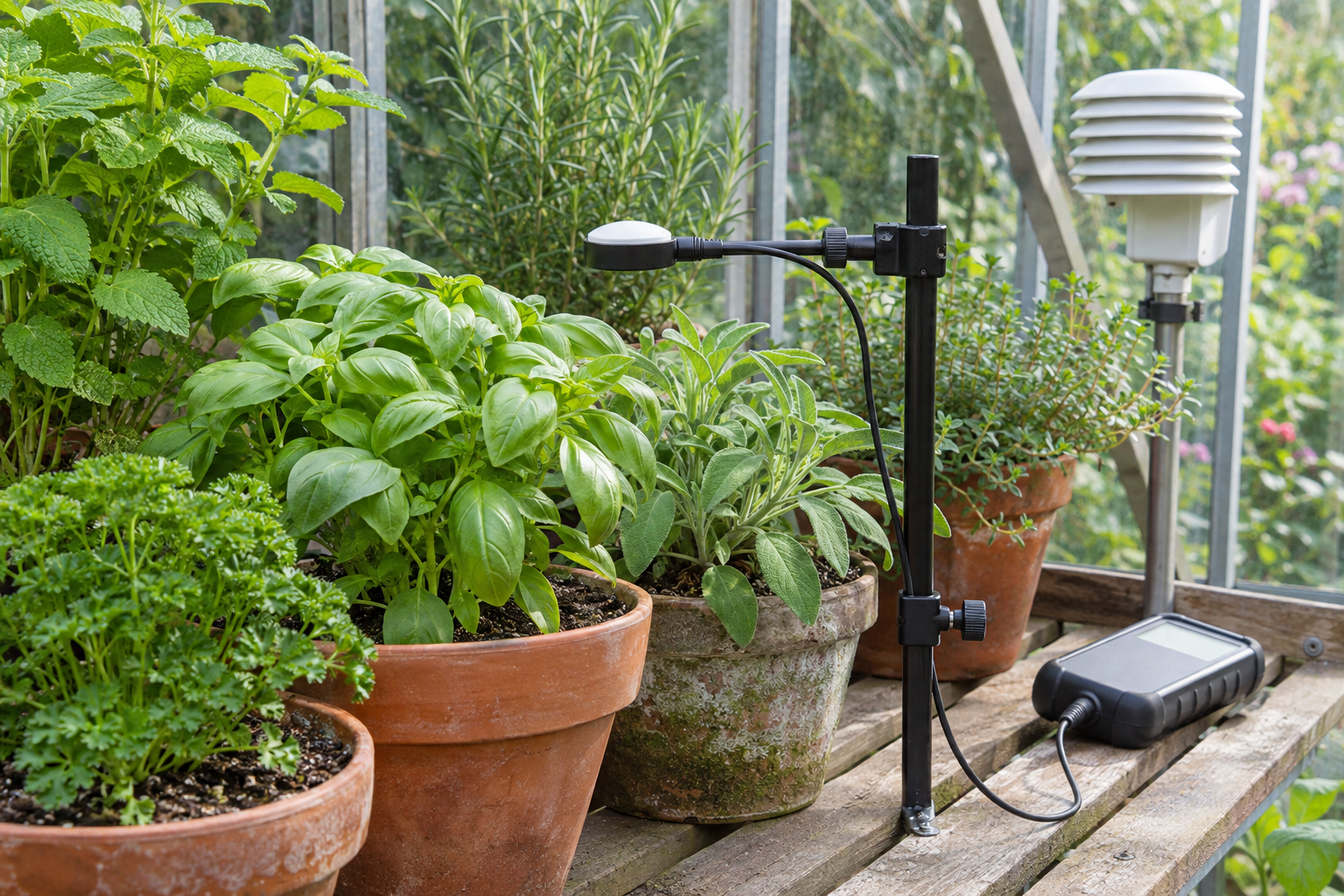
Indoors, use DLI (daily light integral)—the total amount of light a plant gets in a day. PPFD is the intensity at one moment; DLI is that intensity added up over the hours the light is on:
DLI = PPFD × hours × 0.0036
Example: 200 µmol/m²/s for 12 hours = 200 × 12 × 0.0036 = 8.64 mol/m²/day. The 0.0036 is just 3,600 seconds per hour divided by 1,000,000 to turn micromoles into moles (Purdue Extension).
| Plant group | Target DLI (mol/m²/day) | Source |
|---|---|---|
| Low-light foliage houseplants (pothos, snake plant, ZZ) | 3–6 | Iowa State |
| Medium-light foliage and flowering houseplants | 6–10 | Iowa State |
| Cuttings and propagation | 8–10 | Purdue |
| Potted flowering plants | 10–15 | Purdue |
| Leafy greens and herbs grown indoors | 12–16 | Iowa State |
| Lettuce | 12–17 (15–20 in hydroponic greenhouses) | Virginia Tech; Purdue |
| Fruiting vegetables, strawberries | 20+ | Purdue; MSU lists 15+ |
More isn't automatically better. Michigan State notes lettuce can get tip burn when the DLI runs too high. Same light, more hours, also changes the day length—and day length is what triggers flowering in some plants. Look up your plant before you leave a light on 20 hours a day.
3. Soil and containers: roots need air too
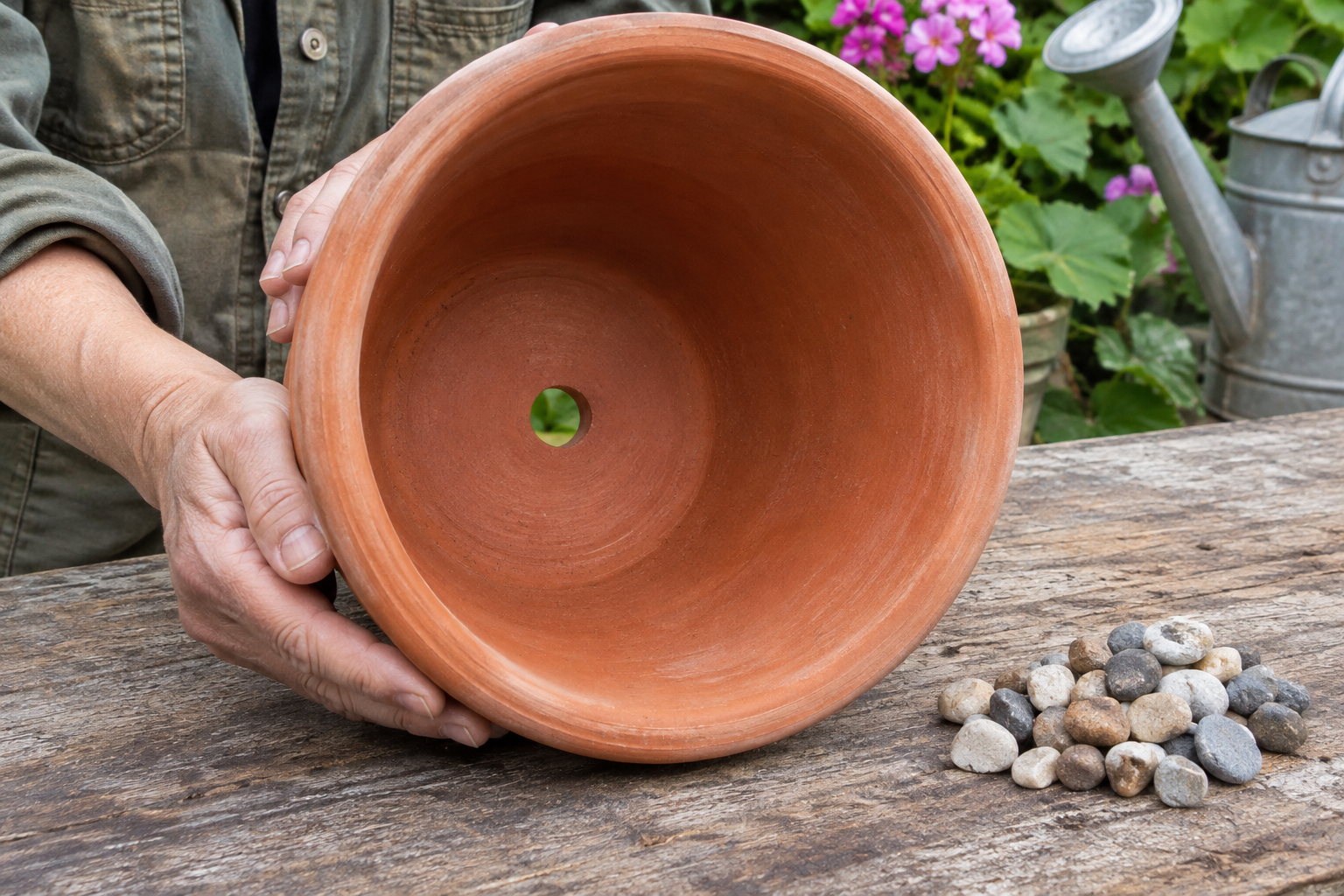
Roots breathe. A pot that stays soggy suffocates them, and suffocating roots look exactly like a hungry plant. So the job of a growing medium is to hold water and keep air pockets open.
Garden soil and potting mix are not the same thing. Garden soil works in the ground. In a pot it packs down and stays wet. For containers, use a potting mix (peat or coco based, with perlite or bark for air) and a pot with real drainage holes.
A few things I'd do every time:
- Pre-moisten the mix before planting. Dry peat repels water, and you'll get channels where water runs straight through.
- Read the bag. Some mixes already contain fertilizer or lime. Know what's in there before you add more.
- Match the mix to the plant. Succulents and agave want fast, sharp drainage. Blueberries want acidic and evenly moist. "Sandy" or "loamy" alone doesn't tell you enough.
- Write down the pot size and mix. Next time you repot, you'll know what to repeat or change.
I've lab-tested the popular bagged mixes so you don't have to guess what's in them: Happy Frog, Ocean Forest and PRO-MIX HP.
4. pH: test before you fix anything
pH controls which nutrients the roots can actually use. Your soil can be loaded with food and the plant still starves if the pH is wrong. Adding more fertilizer at that point just adds salt.
| Growing medium or crop | Target pH | Source |
|---|---|---|
| Lettuce, spinach, onion, broccoli, cabbage, beet, celery | 6.0–6.8 | Oklahoma State |
| Tomato, pepper, squash, cucumber, carrot, kale, garlic, parsley, eggplant | 5.8–6.8 (grows best at 6.0–6.8) | Oklahoma State |
| Sweet potato, watermelon, rhubarb | 5.5–6.8 | Oklahoma State |
| Strawberries | 6.0–6.5 | Oklahoma State |
| Blueberries | 4.5–5.5 (above 5.5 isn't acidic enough) | UMN Extension |
| Soilless potting mix (peat, coco): general reference, species vary | 5.5–6.0 | UConn |
| Potting mix with 20%+ field soil | 6.2–6.5 | UConn |
| Pothos (commercial container production) | 6.5–7.0 | UF/IFAS |
For a garden bed, send a sample to a soil lab. You'll get pH plus what's actually missing, and sometimes what you already have too much of. For pots, a slurry test gets you a solid home reading in a few minutes.
Don't try to swing pH all at once. It's logarithmic—a drop from 7 to 6 is ten times more acidic—and soil buffers against change. Make a modest correction, give it time, retest. Blueberries in particular: acidifying is a project you plan before planting, not a rescue for a yellow bush.
5. Watering: check, don't schedule
The fastest way to kill a plant is watering it on a calendar. Weather, plant size, pot size and light all change how fast it drinks. Check first, then water.
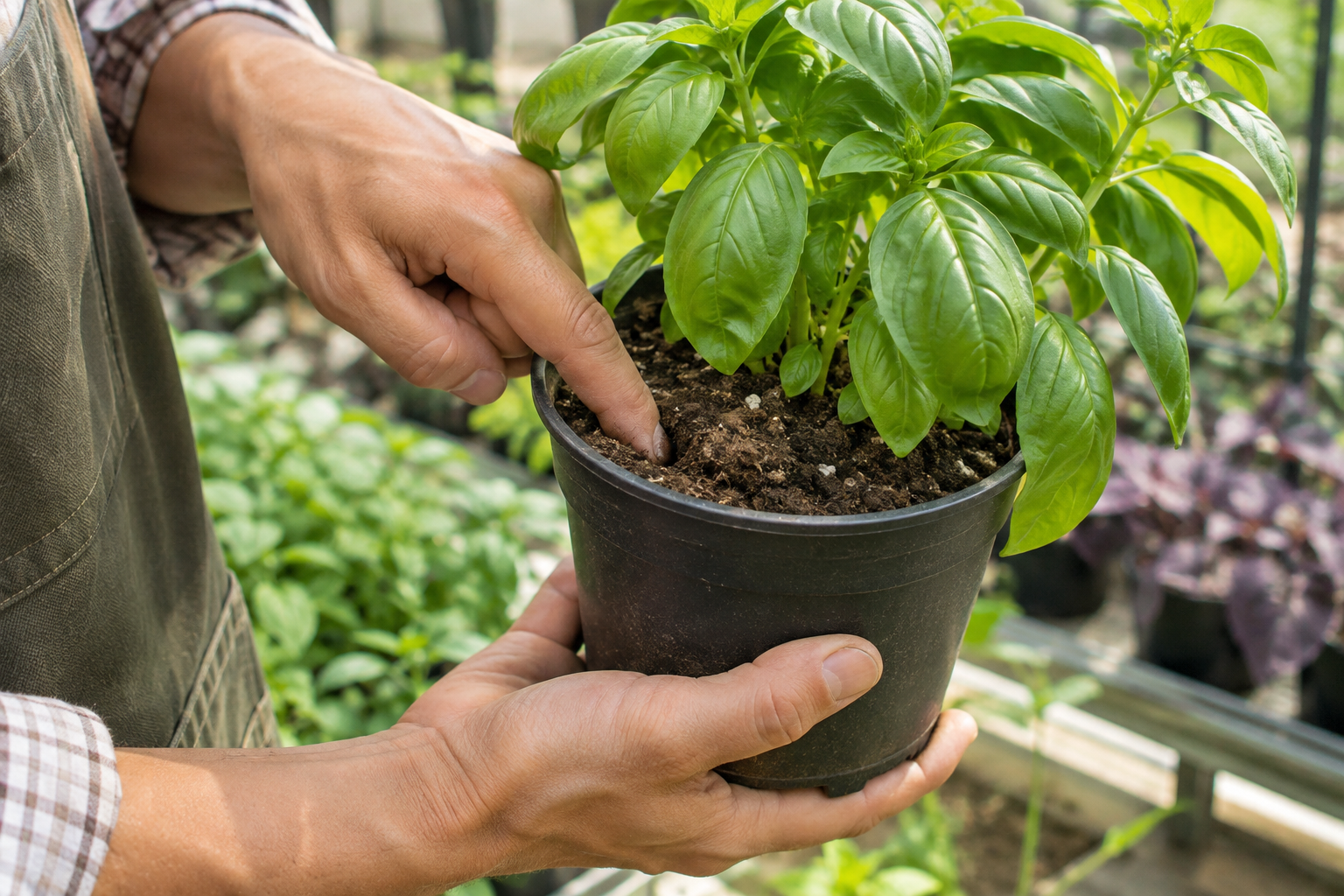
- Feel below the surface. A dry top inch can hide soggy mix underneath. Stick a finger in, or use a probe in big pots.
- Lift the pot. Learn what it weighs right after watering and draining. A light pot is a thirsty pot. This is the most reliable trick I know.
- Water slowly until it drains, moving around the whole root area so water doesn't just shoot down one channel.
- Dump the saucer. A regular pot sitting in a puddle is a pot without drainage.
- Wilting doesn't always mean thirsty. Roots drowning in wet soil wilt too. Check the moisture before you add more water.
Different plants want different amounts of drying between waterings. Succulents want to dry out almost completely; lettuce and blueberries want to stay evenly moist; most houseplants sit in between (UMD Extension). If a pot suddenly stays wet much longer than it used to, something changed—less light, colder room, dying roots or a mix that's breaking down.
6. Nutrients: read the label like a chemist
Those three numbers on every fertilizer bag—say 4-4-4—are percentages by weight of nitrogen (N), phosphate (P₂O₅) and potash (K₂O). Not pure phosphorus and potassium. To get the actual elements:
Elemental P = P₂O₅ × 0.4364
Elemental K = K₂O × 0.8301
Penn State rounds these to 0.44 and 0.83 (Penn State Extension). So that "9" in a 3-9-4 is really about 3.9% phosphorus.
A ratio doesn't tell you a dose. 4-4-4 and 8-8-8 have the same ratio, but one is twice as strong. The math is simple: product weight × percentage. 100 g of a 4-4-4 contains 4 g of N, 4 g of P₂O₅ and 4 g of K₂O. Need 10 g of nitrogen from a 4% product? 10 ÷ 0.04 = 250 g—and that 250 g also brings 10 g each of phosphate and potash along for the ride. Count everything you add. I break this down step by step in How to Calculate NPK.
Liquid vs. dry
Liquid nutrients (like the General Hydroponics Flora trio) are fast and easy to measure. Use a syringe, not a guess. Mixing order matters with the Flora series: shake the bottles, add FloraMicro to the water first and stir, then FloraGro and FloraBloom. Never mix the concentrates together directly (GH FloraMicro label).
Dry and organic amendments (like Jobe's 4-4-4) feed slower because soil microbes have to break them down first. Weigh them; scoops of different products don't weigh the same. Spread topdressings evenly over the root zone, keep them off stems and water them in.
Worm castings are not magic dirt
Castings vary a lot depending on what the worms ate. North Carolina's lab summary of 227 vermicompost samples found 1.2–2.1% nitrogen, 0.2–0.4% phosphorus and 0.4–0.9% potassium, on a dry-weight basis (NCDA&CS). A wet bag weighs more than the dry numbers suggest, and only part of that nitrogen becomes available in the first season (Geisseler et al., 2021). Great amendment—not a complete feed program.
| Product | N–P₂O₅–K₂O | Type | Notes |
|---|---|---|---|
| GH FloraMicro | 5–0–1 | Liquid | Add first, by itself. US formula (not Hardwater). |
| GH FloraGro | 2–1–6 | Liquid | Add after Micro. |
| GH FloraBloom | 0–5–4 | Liquid | No nitrogen. A "bloom" name doesn't mean your plant needs it. |
| Dyna-Gro Grow | 7–9–5 | Liquid | Don't stack a full Dyna-Gro program on top of a full Flora program. |
| Jobe's Organics All Purpose | 4–4–4 | Dry granular | Label: reapply every 6–8 weeks. |
| Dr. Earth Flower Girl (dry) | 3–9–4 | Dry granular | Not the same product as liquid Flower Girl. |
| Down To Earth Langbeinite | 0–0–22 | Dry mined mineral | Also 10.8% magnesium and 22% sulfur. Label: 1 Tbsp per gallon of mix at planting, or 1–2 tsp per gallon monthly. |
| BioAg CytoPlus | 0–0–7.5 | Powder | Mostly humic acid plus micronutrients, including 0.25% boron. Not a potassium source to lean on. |
| Worm castings | Varies | Dry/moist | Use the bag's own analysis. Generic castings have no single number. |
Analyses checked against manufacturer labels, the Oregon Dept. of Agriculture 2023 fertilizer analyses and retailer spec sheets. Formulas change—check the bottle in your hand.
7. Temperature and humidity
Cool-season crops (lettuce, spinach, peas, broccoli) like air around 65–75°F. Warm-season crops (tomatoes, peppers, squash, basil) like 65–95°F, and nights below 55°F can hurt tomato, pepper and eggplant growth and yield (UC Master Gardeners). That's why I never rush tomatoes outside.
Most houseplants are happy in the "intermediate" range of 60–75°F. Tropical foliage plants come from places with 70–90% humidity, while a heated house in winter can drop below 10% (Colorado State PlantTalk). Cacti and succulents don't care.
Misting doesn't fix low humidity—the effect is gone in minutes (Penn State Extension). Group plants together or run a humidifier, and measure with a hygrometer instead of guessing.
8. Transplanting without shock
- Harden off seedlings started indoors. Give them a little outdoor sun and wind at a time over several days before planting out (UMN Extension).
- Water the root ball first so it slides out in one piece. Support the plant, don't yank the stem.
- Plant at the same depth it was growing. Tomatoes are the exception—they can go deeper and root along the buried stem (UMN Extension). Lettuce and strawberries need the crown left at the surface.
- Don't dump fertilizer in the hole. Some crops, like kiwi, specifically shouldn't get fertilizer or manure in the planting hole (OSU Extension).
- Water it in to settle the mix, then leave it alone. A transplant needs to root, not a feeding program.
9. Troubleshoot in this order
Yellow leaves have a dozen possible causes. Check them in this order, cheapest and most common first:
- Watering and drainage. Is the pot wet for days? Bone dry?
- Light. Did it move, did the season change, is the grow light too far away?
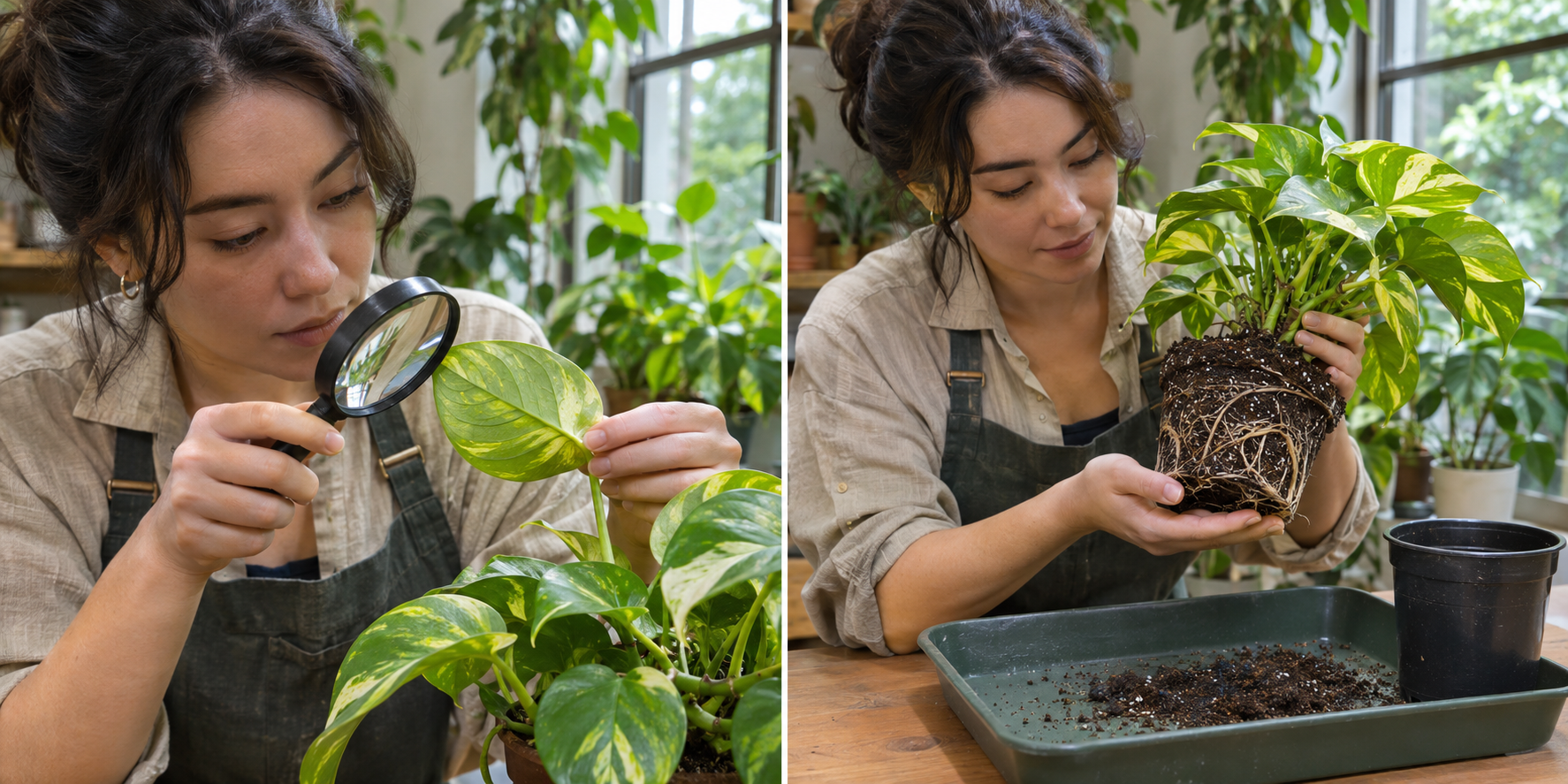
- Roots. Slide it out. White and firm is good. Brown, mushy or circling isn't.
- Temperature. Cold windows, heater vents, a cold night outside.
- Pests. Check leaf undersides and new growth. Spider mites love dry indoor air (here's how I get rid of them).
- pH. Test it.
- Nutrients. Only now. Lower leaves yellowing first points one way; new growth yellowing points another.
Change one thing, then give it time and judge the new growth. Old damaged leaves don't heal; they just get replaced.
Frequently asked questions
What do all plants need to grow?
Light, water, air at the roots, the right temperature, nutrients and a root-zone pH that lets them use those nutrients. Light is usually the limit indoors; watering and drainage cause most problems in pots.
How much light does a plant need?
It depends on the group. Low-light foliage houseplants need a daily light integral of about 3–6 mol/m²/day and medium-light houseplants 6–10, leafy greens and herbs about 12–20, and fruiting crops like tomatoes 20 or more. Outdoors, tomatoes need at least 8 hours of direct sun.
How often should I water my plants?
Whenever the root zone is dry enough for that plant—not on a fixed schedule. Check moisture below the surface and the weight of the pot, water until it drains, and empty the saucer.
What pH do most plants like?
Most vegetables do best at 6.0–6.8 in garden soil. Soilless potting mixes generally run around 5.5–6.0, though some houseplants are grown higher. Acid lovers like blueberries need 4.5–5.5.
What do the three numbers on fertilizer mean?
Percent by weight of nitrogen, phosphate (P₂O₅) and potash (K₂O). Multiply the middle number by 0.4364 for elemental phosphorus and the last by 0.8301 for elemental potassium. The numbers give you a ratio and concentration, not a dose—follow the label rate.
Should I put gravel in the bottom of my pots?
No. Gravel raises the saturated zone in the pot instead of improving drainage. Use a pot with holes and mix perlite or bark through the potting mix.
Why are my plant's leaves turning yellow?
Most often overwatering, poor drainage or low light. Check those, then roots, temperature, pests and pH before blaming nutrients.
Is potting soil the same as garden soil?
No. Garden soil compacts and stays wet in a container. Potting mix is built from lighter materials like peat, coco, perlite and bark so roots get air.
What I use
These are the tools and products I actually reach for. You don't need all of them—start with a good mix, a pot that drains and a way to measure.
 FoxFarm Happy Frog Potting SoilMy favorite bagged soil. It's alive, which also means it can show up with fungus gnats.View product
 PRO-MIX HPAiry peat-and-perlite mix with stable pH. Not a full meal—you supply the nutrients.View product


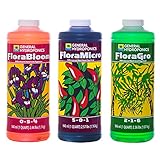 General Hydroponics Flora trioThree liquids you can blend for any stage. Micro first, always.View product
 Jobe's Organics All Purpose 4-4-4Cheap, gentle dry feed with microbes. Easy topdressing for almost anything.View product
 pH, PPM and temperature meterWaterproof and reads pH and PPM at the same time. Calibrate it.View product


 Wide-spray watering canSpreads water gently over the whole root zone so you can water slowly.View product
 Govee thermometer / hygrometerKnow your real temperature and humidity instead of guessing.View product
 Smart outlet timerRuns a grow light on a set schedule from your phone, so the DLI stays consistent.View product
Also mentioned in this guide
 Dyna-Gro Grow 7-9-5One-bottle liquid alternative to the Flora trio. Pick one program—don't stack it on top of Flora.View product
 Dr. Earth Flower Girl 3-9-4 (dry)Organic granular with extra phosphate for flowering and fruiting plants. Slow release; weigh it.View product
 Down To Earth Langbeinite 0-0-22Mined potassium, magnesium and sulfur. Label rate: 1 Tbsp per gallon of mix at planting.View product
 BioAg CytoPlusHumic acid and micronutrients, 0-0-7.5. Contains boron—skip it on boron-sensitive crops.View product
 Wiggle Worm worm castingsGentle organic amendment. Use the bag's own analysis; castings vary by batch.View product
 0.1 g digital scaleWeigh dry amendments instead of trusting scoops. Different products don't weigh the same.View product
 PAR / PPFD meter with DLIMeasures light at the canopy so the DLI math uses real numbers, not the box claim.View product


Affiliate disclosure: as an Amazon Associate, EVYGrows earns from qualifying purchases at no extra cost to you. Prices and packaging change—check the listing for current details.
Scientific and extension sources
- Iowa State University: DLI categories for indoor plants under supplemental light
- Virginia Tech SPES-720: calculating and using daily light integral
- UF/IFAS ENH894: cultural guidelines for commercial production of interiorscape Epipremnum (pothos)
- Michigan State University: DLI requirements by crop type
- Purdue Extension HO-283: daily light integral and crop requirements
- Rutgers NJAES FS678: tomato sun requirement
- Oklahoma State: soil test interpretations for vegetable crops (pH table)
- Oklahoma State: growing strawberries in the home garden
- University of Minnesota: growing blueberries
- UConn: interpreting greenhouse media test results (pH)
- University of Illinois: container drainage and the gravel myth
- Penn State: how much P and K is really in your fertilizer
- NCDA&CS: nutrient concentrations in compost and vermicompost
- Geisseler et al. (2021), Journal of Environmental Quality: nitrogen release from organic fertilizers and composts
- UC Master Gardeners: cool- and warm-season crop temperatures
- Colorado State PlantTalk: houseplant temperature and humidity
- Penn State: humidity and houseplants
- University of Maryland: watering indoor plants
- General Hydroponics: FloraMicro label and mixing order
Next in your grow
Grow guides: Strawberries · Blueberries · Raspberries · Blackberries · Mushrooms
Soil tests: Home slurry test · Happy Frog lab test · Ocean Forest lab test · PRO-MIX HP lab test
Growing indoors: How to set up a grow tent · Bring outdoor plants inside without bugs · DIY automated drip tub
Stuck on something? Ask me a question or join the EVYGrows community. New videos go up on YouTube first.
You may also like

DIY Solo Cup Automated Drip Feed Grow Tub