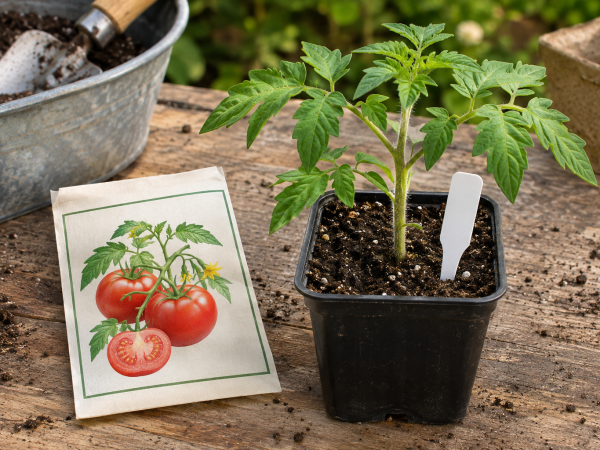
How to Grow Blueberries

Blueberry Care Sheet
Best Type of Soil: Sandy or loamy soil is ideal for blueberries as they need well-draining, acidic soils.
Soil Amendments: Adding organic matter like pine bark or peat moss helps maintain acidity and moisture without waterlogging.
Our Recommendation:
 FoxFarm Happy Frog Potting SoilRich, living soil that fruiting plants love. Buy it locally if you can.View product

Happy Frog has enough nutrients to start and is very well balanced according to our lab tests. The peat moss will help aerate the soil mix and also reduce the pH as blueberries like really acidic soils compared to other fruits.
Target PPM (Nutrient Level):
Ideal PPM Range: Blueberries thrive with a nutrient solution or soil ppm around 200-400 ppm during growth phases and this can be added to the feeds every 4-6 weeks. For hydroponic setups, maintaining a lower ppm around 500-700 is recommended to avoid salt buildup.
 pH / TDS / temperature meterReads pH, PPM and water temperature with one pen. Calibrate it before each grow.View product
NPK Ratio (Vegetative and Bloom Phases):
Vegetative Phase: An NPK ratio around 1-1-1 is suitable to encourage leaf and root development.
Bloom/Fruiting Phase: Transition to a lower nitrogen ratio, such as 1-2-3 to support flower and fruit production.
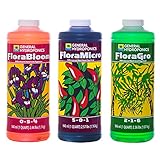 General Hydroponics Flora Series trial packThe 3-part synthetic nutrients in small bottles. Good for testing before you buy big.View product
The general hydroponics trio gives you plenty of options to create a vegetative or bloom juice to modify your target NPK. For instance, a 1-1-1 NPK would be achieve by putting a ratio of 1:1 of Flora Micro:Flora Bloom(5-0-1 + 0-5-4) or 5-5-5, which is factors down to around 1-1-1. A NPK of 1-2-3 on the otherhand, would be achieved by mixing a ratio or 1:2:3 of Micro:Gro:Bloom because the math would be (5-0-1+4-2-12+0-15-12) or (9-16-25). Use these mix ratios and continue adding it at the same rate until your feed water hits the target ppm listed above.
pH Range:
Vegetative and Bloom Phases: Blueberries require an acidic pH of 4.5-5.5. Soil amendments like sulfur or acidified fertilizers can help maintain these levels.
 General Hydroponics pH control kitpH up, pH down and test drops. Buy it sold by Amazon; I’ve had bad bottles from third-party sellers.View product
Optimal Light Intensity: Blueberries need full sun outdoors, ideally around 6-8 hours daily. For indoor or greenhouse growing, a PPFD (Photosynthetic Photon Flux Density) of around 400-600 µmol/m²/s can support fruiting.
 Spider Farmer SF2000 LEDEnough light for fruiting berries in a 2×4. Aim for 600–800 PPFD at the leaves.View product
Temperature Range:
Vegetative Phase: Blueberries grow well in a range of 65-75°F (18-24°C), with a slight preference for cooler nights around 55°F (13°C).
Bloom/Fruiting Phase: Daytime temperatures of 70-80°F (21-27°C) encourage optimal fruit set and ripening.
Humidity Settings:
Vegetative Phase: Blueberries do well with a relative humidity of 50-70%, especially in drier climates.
Bloom/Fruiting Phase: Lowering humidity to around 40-50% can help prevent fungal issues, especially on ripening fruits.
Additional Tips for High-Quality Blueberry Production:
- Mulching: Adding 2-4 inches of organic mulch (like pine needles or wood chips) helps retain soil moisture, regulates temperature, and maintains soil acidity.
- Pruning: Regular pruning of old or weak branches encourages new growth and higher fruit yields.
- Irrigation: Blueberries have shallow roots and need consistent moisture without waterlogging. Drip irrigation helps maintain ideal moisture levels.
- Fertilization Timing: Apply nitrogen-rich fertilizers early in the season and switch to higher potassium and phosphorus as flowers and fruits develop.
You may also like
How to Grow Plants: Complete Guide & Interactive Cheat Sheet (Light, Soil, Water, pH, Nutrients)